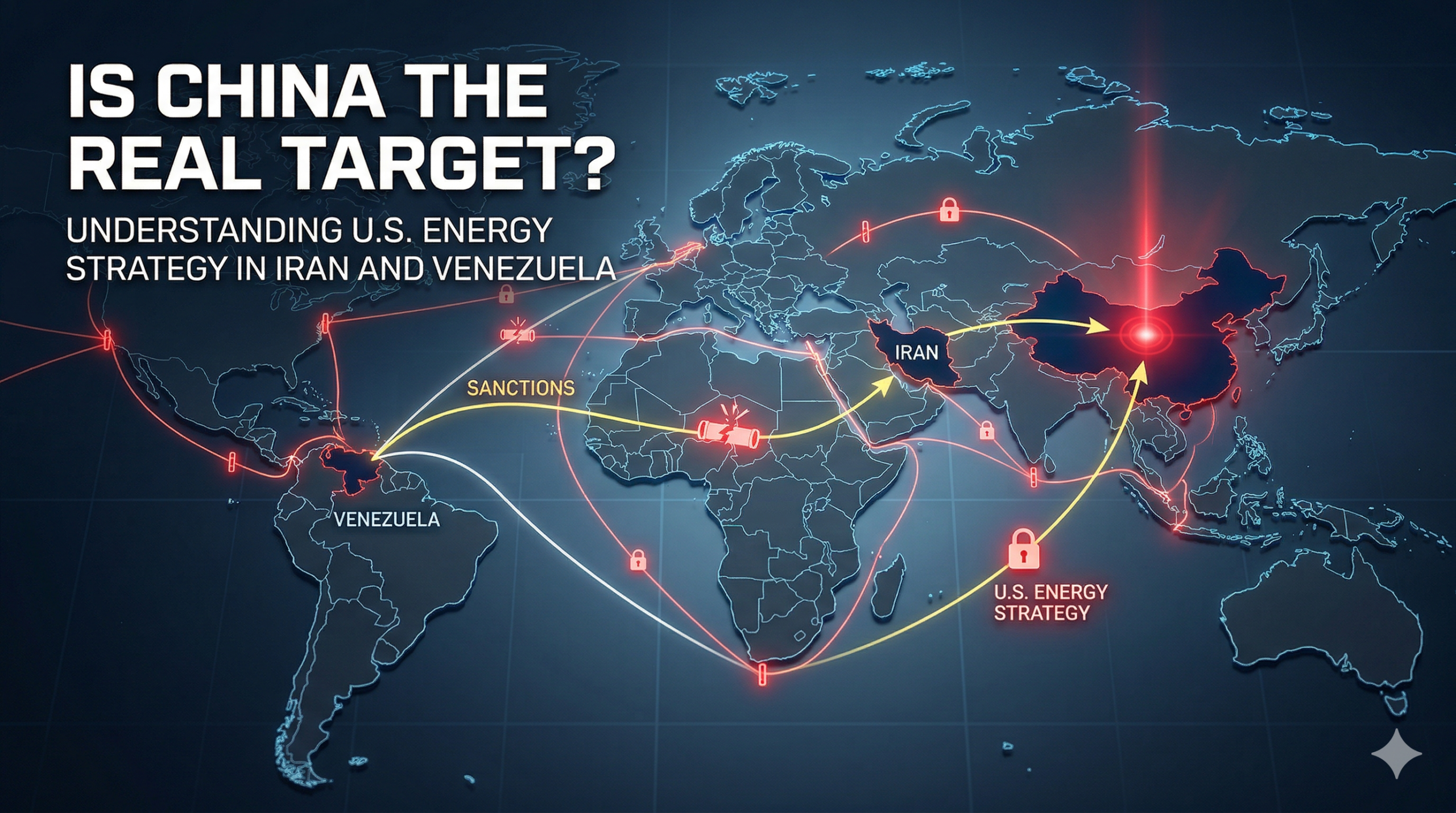
This article explores the theory that U.S. energy strategy in Iran and Venezuela is a calculated move to undermine China's economic rise. By restricting global oil supplies and targeting the "shadow markets" that provide China with discounted crude, the U.S. forces Beijing to face higher energy costs and increased strategic vulnerability.
The analysis highlights how these sanctions act as a modern form of energy encirclement, reminiscent of 1930s embargoes against Japan. While traditionally viewed as regional policy, this strategy increasingly serves as a primary lever in the broader U.S.-China systemic rivalry.