
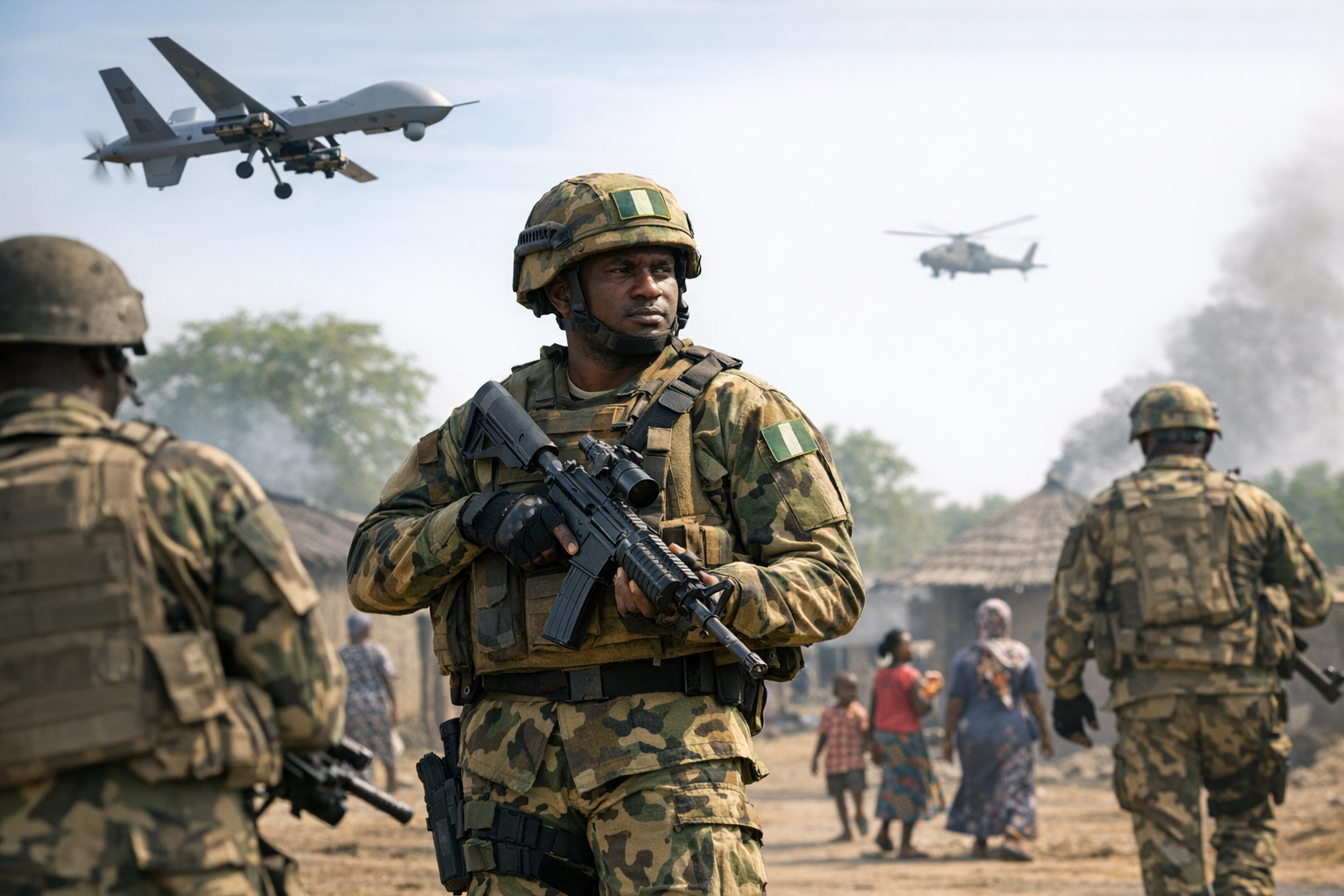
Nigeria’s security landscape is undergoing another turbulent moment. On one hand, the military is reporting significant operational successes against armed groups across the country—from neutralizing terrorists in the North‑East to dismantling IPOB/ESN camps in the South‑East. On the other hand, public skepticism is rising, especially around the perceived regional imbalance in security operations and the controversies surrounding airstrikes that allegedly affect civilians.
The tension between these two narratives—military achievement and public distrust—has shaped a heated national debate. Posts like “Why this obsession with the South East?” are circulating widely, reflecting a growing sense of grievance among some communities. Meanwhile, others argue that the military deserves more credit than criticism, given the scale of threats it faces.
This clash of perspectives is now defining Nigeria’s security conversation.
Growing Praise for the Military’s Operations
Across several regions, the Nigerian Army has reported a string of operational gains. These updates have been met with praise from citizens who feel the military is finally pushing back against long‑standing threats.
Key areas where the military has been commended:
- South‑East operations against IPOB/ESN: Troops have intensified raids on camps in areas like Ajali Forest in Enugu, recovering IEDs, weapons, and ransom funds. Supporters of these operations argue that they are necessary to curb violent attacks, kidnappings, and the enforcement of illegal sit‑at‑home orders.
- North‑East counterterrorism efforts: The military continues to neutralize insurgents, disrupt logistics routes, and repel attacks in Borno and surrounding areas. These actions are seen as essential in a region that has endured over a decade of extremist violence.
- Improved intelligence‑led operations: Officials have emphasized that recent missions are more precise and data‑driven, reflecting a shift toward modern counterinsurgency tactics.
For many Nigerians, these successes represent a rare moment of momentum in the fight against insecurity. They see the military as overstretched, under‑resourced, and often under‑appreciated—yet still making progress.
But this is only one side of the story.
Rising Skepticism and Accusations of Bias
Despite the praise, a parallel narrative is gaining traction: that the military’s operations are unevenly distributed and disproportionately harsh in certain regions, especially the South‑East.
The core concerns driving this skepticism include:
- Perceived over‑militarization of the South‑East: Critics argue that the intensity of operations against IPOB/ESN far exceeds the response to banditry, herdsmen attacks, and kidnappings in other regions. This has fueled questions like “Why this obsession with the South East?”—a phrase now common on social media.
- Historical mistrust: The South‑East has a long and complicated relationship with federal security forces. For some residents, current operations feel like a continuation of old wounds rather than a neutral security response.
- Comparisons with other regions: Many point to the North‑West, where banditry has displaced thousands, or the Middle Belt, where herdsmen attacks continue, and ask why similar large‑scale crackdowns are not as visible.
These concerns do not necessarily deny the existence of armed groups in the South‑East. Instead, they question whether the scale and style of the response is proportionate and fair.
Airstrike Controversies and Civilian Casualty Fears
The debate intensified after the recent Jilli airstrike near the Borno–Yobe border. The military described the strike as an intelligence‑driven attack on a terrorist logistics hub. However, local reports claimed that civilians—including people at a market—may have been affected.
The Defence Minister publicly insisted that “no innocent victims” were hit, stating that only insurgents and their supporters were targeted. The Federal Government has ordered a full investigation.
This incident has revived long‑standing concerns about:
- Accuracy of intelligence used in air operations
- The difficulty of distinguishing civilians from insurgents in conflict zones
- Past airstrike controversies that shook public trust
For many Nigerians, the fear is not just about this specific incident but about a pattern. Airstrikes have been used more frequently in recent years, and while they are effective against hardened targets, they also carry a higher risk of unintended casualties.
The result is a widening gap between official military statements and public perception.
A Country Wrestling With Multiple Threats
Beyond the debates about bias or airstrikes, insecurity continues to affect daily life across Nigeria.
- Herdsmen attacks have been reported in Ondo, Enugu, and Benue, prompting state‑level crackdowns.
- Kidnappings and killings persist in Kaduna and other states.
- Mass displacement is rising, with some public figures warning that the scale now resembles “a civil war.”
These realities complicate the national conversation. While some regions feel over‑policed, others feel under‑protected. While some praise the military’s aggressiveness, others fear its methods.
Nigeria is dealing with multiple, overlapping security crises, and no single narrative captures the full picture.
Why the Debate Feels So Polarized
Several factors explain why the conversation around military operations has become so heated:
- Regional identity and historical memory shape how communities interpret security actions.
- Social media amplifies grievances, often faster than official clarifications can catch up.
- Insecurity is deeply personal, affecting livelihoods, mobility, and emotional well‑being.
- Trust in institutions varies widely, influencing whether people believe official statements or local reports.
The result is a national debate where the same event can be seen as either a necessary security measure or an act of targeted aggression—depending on who you ask.
The Path Forward
Nigeria’s security challenges require both strong military action and strong public trust. Without trust, even successful operations can be overshadowed by suspicion. Without effective operations, insecurity continues to spread.
A more unified national conversation may depend on:
- Transparent investigations into controversial incidents
- Clear communication about the rationale behind operations
- Equal attention to all regions facing violence
- Community engagement to reduce mistrust
- Continued pressure on all armed groups, regardless of geography
These steps won’t solve everything, but they can help bridge the widening gap between military strategy and public perception.